
Project Hail Mary Review: Ryan Gosling and a Puppet Alien Made Me Cry in a Theater Full of Strangers
Project Hail Mary is the best sci-fi film since Interstellar, and it earns that comparison without borrowing from it. Phil Lord and Christopher Miller took Andy Weir’s 2021 novel and built something that feels genuinely rare in 2026: a $200 million original blockbuster that trusts its audience to care about science, friendship, and a five-legged alien who communicates through musical chords.
I picked up the book because of my best friend Blake. We were in Nashville for his wedding weekend, and old habits kicked in. When we lived in Columbus, Ohio, we’d burn entire afternoons wandering through bookstores together. So there we were, years later, perusing shelves again like nothing had changed. He pulled Project Hail Mary off the shelf and told me it was the best book he’d ever read. Mighty high praise from someone whose recommendations I’ve trusted for over 10 years. So I read it. Quickly. He was right.
Which means I walked into the theater with the kind of expectations that usually guarantee disappointment. The casting announcement alone had me nervous. Gosling? For Ryland Grace? The guy from Drive playing a middle school science teacher who wakes up alone on a spaceship with amnesia and has to save the world?
He’s perfect. Completely, annoyingly perfect.
Gosling Carries the First Act Alone
The opening forty minutes belong entirely to Gosling, and he does something I haven’t seen him do before. He plays confused without playing stupid. Grace wakes up on the Hail Mary with no memory of who he is, why he’s there, or why his two crewmates are dead beside him. The film uses this amnesia as a structural device, cutting between Grace’s slow recovery aboard the ship and flashbacks to the Petrova problem on Earth. It works because Gosling sells both versions of the character: the enthusiastic teacher who gets recruited by Sandra Huller’s Eva Stratt, and the terrified astronaut doing particle physics at a whiteboard while trying not to spiral.
The flashback structure could have been a mess. Drew Goddard’s screenplay makes it feel inevitable instead. Every time Grace remembers something aboard the ship, the film cuts to the moment that memory was formed, and those Earth-side sequences do double duty. They deliver exposition (what is Astrophage, why is the sun dying, how did this mission come together) while building the emotional stakes that pay off in the third act.
Sandra Huller deserves a paragraph of her own. She plays Stratt with a dry, borderline terrifying authority that makes every scene on Earth feel like it has actual weight. When she conscripts scientists from twelve countries and overrides sovereign governments to build the Hail Mary, you believe it because Huller makes you believe that no one in any room would dare tell her no. Donald Clarke at the Irish Times is already floating her name for awards consideration. He’s right to.
Rocky Is the Best Movie Character of the Year
Here is where the film either works or falls apart, and it works so well that I’m still thinking about it days later.
Rocky is an alien. Five legs. No face. Shaped like a rock (hence the name). He communicates by vibrating air at specific frequencies, which Grace’s ears register as musical notes. He is performed practically on set by puppeteer James Ortiz and a five-person team Lord and Miller nicknamed “The Rockyteers.” Ray Porter and Meryl Streep share the vocal duties.
No CGI alien. A puppet. In a $200 million movie. In 2026.
The choice matters because you can feel it. When Grace reaches out and touches Rocky for the first time, the interaction has a physical reality that no rendering farm could replicate. Gosling said on Josh Horowitz’s podcast that performing opposite a practical creature changed his approach entirely, that he couldn’t phone in his reactions because the thing was actually there, moving, responding, being operated by five people who were acting right alongside him.
The friendship between Grace and Rocky is the engine of the entire film. Their scenes together have the rhythm of a buddy comedy, which makes sense given Lord and Miller’s background (21 Jump Street, The LEGO Movie). But the emotional register goes deeper than comedy. When Rocky says “I am scared” through three descending notes and Grace responds “me too,” the theater I was in went completely silent. A puppet alien with no facial expressions made a room full of adults hold their breath.
Project Hail Mary cost $200 million, earned $80.6 million in its opening weekend, and crossed $300 million worldwide in under two weeks. It is the only non-sequel, non-franchise film besides Oppenheimer to open above $80 million domestically in the past decade.
What Doesn’t Work
The runtime. At 156 minutes, the film is at least twenty minutes too long. This is nearly universal among critics (95% on Rotten Tomatoes, but the runtime complaint appears in almost every positive review). The pacing slackens in the middle section when Grace is working through Astrophage solutions solo, and the ending has what Donald Clarke called “too-many-endings syndrome.” You feel the film reach its emotional peak and then keep going for another fifteen minutes, stacking conclusions on top of each other until the impact of the best moment starts to fade.
Robert Daniels at RogerEbert.com gave it 2.5 out of 4, calling it “TV-dinner sci-fi” and noting that the final stretch “forces that incredible emotion to recede.” Owen Gleiberman at Variety went harder, calling the film “baggy and derivative.” I think both critics are identifying a real problem but overstating its severity. The ending doesn’t ruin the film. It just means the film peaks ten minutes before it actually ends, which is a frustrating but forgivable flaw in something this ambitious.
The Verdict
Go see it. In a theater. In IMAX if you can find it (Greig Fraser shot the entire film on ARRI Alexa 65 cameras for the 1.43:1 IMAX ratio, and the space sequences deserve that format).
Project Hail Mary is a film about a science teacher who saves the world because he pays attention, asks good questions, and makes a friend. That premise sounds simple because it is. The execution is what makes it extraordinary. Lord and Miller built every set practically, refused to use greenscreen, hired a team of puppeteers instead of a VFX house for their alien lead, and trusted that an audience would sit for two and a half hours of a guy doing science on a whiteboard if the stakes felt real and the friendship felt earned.
They were right. The CinemaScore is an A. The audience rating on Rotten Tomatoes is 96%. The box office says everything the industry needs to hear about what happens when you make something original and give it room to breathe.
I walked out of the theater wanting to read the book again. Third time.
Our Picks
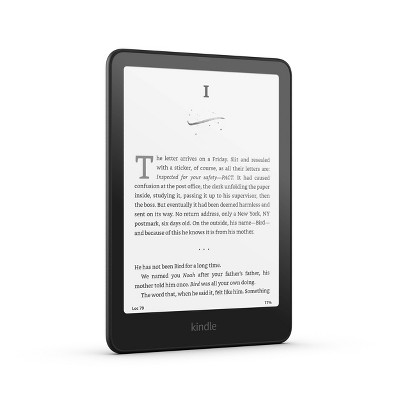
Kindle Paperwhite (2024)
$150
Shop on Amazon
Apple TV 4K
$129
Shop on Amazon
Sony WH-1000XM5 Headphones
$328
Shop on AmazonAs an Amazon Associate, we earn from qualifying purchases.