BALMUDA The Teppanyaki: A $449 Griddle That Thinks It's a Design Object
BALMUDA is the Japanese appliance company that gets compared to Apple more than any brand probably should. Founded by Gen Terao, a high school dropout who spent a year wandering Spain, Italy, and Morocco before returning to Japan and spending the next decade as a guitarist in a rock band, the company has built a following by turning mundane kitchen appliances into objects you actually want on your counter. When his band broke up in 2001, Terao taught himself industrial design by showing up unannounced at factories and studying manufacturing processes from the floor up. He launched BALMUDA Design in 2003. Their toaster costs $329 and has a cult following. Their kettle looks like it belongs in a museum gift shop. The GreenFan, a $349 electric fan, turned Terao into something of a celebrity in Japanese consumer electronics when it debuted in 2010.
That background matters here. Terao’s instinct is to find a product category that people have stopped thinking about, something so commoditized it has become invisible, and then redesign it from the plate up. The electric griddle was overdue.
The Teppanyaki is their latest. $449 for a tabletop griddle. Here’s why that number isn’t as absurd as it sounds.
What Teppanyaki Actually Is
Most Americans know teppanyaki from Benihana. The onion volcano. The shrimp tail toss. The performative knife work. That version, popularized in the 1960s for Western audiences, is entertaining but only part of the story.
The word itself combines “teppan” (iron plate) and “yaki” (grilled). The tradition traces back over 200 years in Japanese home cooking, though the modern restaurant format took shape in 1945 when chef Shigeji Fujioka at Misono in Kobe started grilling beef steaks on a flat iron plate for Western customers. The format caught on because of its simplicity and its theater. You cook in front of people. They watch the food go from raw to done. The meal becomes an event rather than a delivery from the kitchen.
In Japanese homes, teppanyaki has always been more casual than the restaurant version. A hot plate in the center of the table. Sliced vegetables, thinly cut meat, seafood. Everyone eats as things come off the surface. The social geometry changes when the cooking happens where the eating happens. Conversation moves differently when you’re all facing the same hot plate instead of staring across a table at each other.
BALMUDA designed The Teppanyaki for that home version of the experience. Not the Benihana show. The Tuesday night dinner where the griddle sits between you and whoever you’re eating with, and the whole thing takes forty-five minutes from heat-up to cleanup.
The Plate Is the Product
Standard electric griddles use a cooking surface that’s typically under 3mm thick. The BALMUDA plate is 6.6mm of three-layer clad stainless steel and aluminum. More than double the industry standard. That thickness matters because it stores and distributes heat more evenly, eliminating the hot spots that burn your food in the center while leaving the edges undercooked.
The cooking surface measures 18.1 by 9.6 inches. Four precision heat settings (320, 360, 400, and 430 degrees Fahrenheit) cover everything from delicate fish to high-heat searing. Standard electric griddles fluctuate as much as 70 degrees from their set temperature. BALMUDA’s plate holds steady. That consistency is the difference between a steak with a uniform crust and one with a gray band through the middle.
The surface is knife-friendly, meaning you can slice and serve directly on the plate without a cutting board. 1,120 watts of power, a 6.5-foot cord, and an auto-off safety feature round out the specs. The whole unit measures 22.6 by 13.1 by 3.5 inches and weighs 11.5 pounds. A spatula and oil tray come included.
What to Cook on It
The beauty of teppanyaki at home is range. This is not a single-purpose appliance.
Thinly sliced ribeye or skirt steak, seared fast at 430 degrees. Scallops that get a proper crust in ninety seconds per side because the plate holds its heat when cold protein hits the surface. Okonomiyaki, the savory Japanese pancake that practically demands a flat, even cooking surface. Yakisoba with vegetables, cooked in stages so nothing gets soggy.
Breakfast works too. Pancakes come out remarkably even when there are no hot spots to worry about. Eggs, bacon, and hash browns all at once across the surface, each in its own zone, each at the right temperature because 320 on the left side is actually 320 on the left side.
For vegetables, the 360-degree setting handles asparagus, mushrooms, and zucchini without charring. Shishito peppers at 400 blister in about two minutes. The real trick is cooking proteins on one half and vegetables on the other simultaneously. The even heat distribution makes this work in a way that cheaper griddles simply cannot manage.
How It Stacks Up Against Competitors
The Zojirushi Gourmet Sizzler EA-DCC10 is the most obvious comparison. It runs about $135 to $170 depending on the day, has a larger 19-by-12.5-inch cooking surface, 1,350 watts, and a nonstick ceramic coating. It also comes with a lid, which the BALMUDA lacks. For pure cooking area per dollar, the Zojirushi wins easily.
But the cooking surfaces are fundamentally different products. The Zojirushi uses a nonstick coating that will degrade over time and cannot handle metal utensils. The BALMUDA’s clad steel plate is the kind of surface that gets better with seasoning and will outlast the heating element underneath it. You can cut on it. You can use metal spatulas without flinching. That durability gap matters if you plan to use the thing regularly for years rather than pulling it out for the occasional weekend brunch.
Then there’s the $40 Presto electric griddle at Target. Perfectly functional for pancakes. Thin plate, uneven heat, wobbly legs, nonstick coating that starts flaking within a year. It does the job in the same way that a $15 corkscrew opens a bottle of wine. Technically correct. Spiritually empty.
Cleaning and Maintenance
This is where the clad steel plate earns points over nonstick competitors. After cooking, you let the plate cool, wipe it down with a damp cloth, and hit any stubborn spots with a non-abrasive scrub. The oil tray catches drippings through a channel built into the plate’s edge, so grease doesn’t pool or spill onto the table. That channel design is one of those details you don’t notice until you’ve used a griddle without one and spent ten minutes cleaning your dining table.
The plate is removable from the heating base, which makes deeper cleaning straightforward. No nonstick coating means no anxiety about scratching the surface or wearing through a chemical layer. Over time, the steel develops a patina. This is normal. This is good. It means the surface is seasoning itself, building up a natural layer that improves its release properties with use.
The Entertaining Argument
I’ll be direct. If you have people over for dinner more than twice a month, this is one of the better investments you can make in your kitchen. Not because it’s fancy. Because it changes the format of the meal.
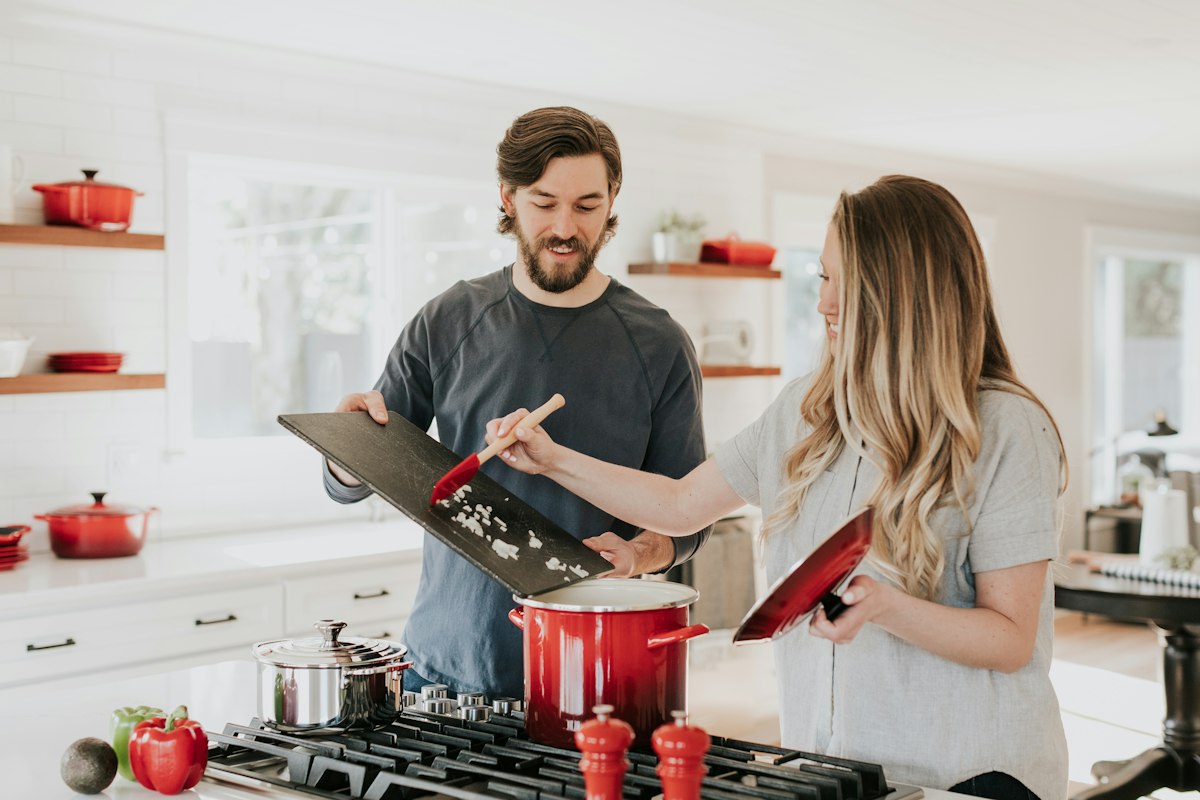
Set the BALMUDA in the center of the table. Put out plates of sliced meat, vegetables, shrimp, whatever you’re working with. Pour drinks. Turn the dial to 400. Now everyone is part of the cooking. The host isn’t trapped in the kitchen plating courses. Guests aren’t sitting in the living room making small talk while waiting. The food is the activity. People cook what they want, eat when it’s ready, and the whole evening has a rhythm that a plated dinner from the kitchen rarely achieves.
It works for two people on a weeknight. It works for six on a Saturday. The format scales in a way that oven-to-table cooking does not.
The Price Question
$449 for a griddle. You can buy a perfectly functional electric griddle for $40 at Target. The difference is in the cooking surface quality, the heat precision, and whether you care about having something on your table that looks intentional. The Zojirushi sits in the middle at roughly a third of the price and delivers strong performance with some material trade-offs. If you cook for other people regularly and enjoy the performance of it, the BALMUDA earns its price over time. If you make pancakes twice a month, it doesn’t.
Our Picks

Glencairn Whisky Glass (Set of 4)
$30
Shop on Amazon
Fellow Stagg EKG Kettle
$169
Shop on Amazon
Victorinox Fibrox Pro Chef Knife
$38
Shop on AmazonAs an Amazon Associate, we earn from qualifying purchases.