Overcrest Rally Appalachia: Broken Brakes, a Lister Bell Stratos, and Why the Passenger Seat Is the Right One
Andrew Ritchie has attended Overcrest Rally Appalachia four times. He doesn’t drive. He navigates, rides shotgun, and takes photographs. The essay he wrote for Petrolicious argues that this is the right call, and by the end of it, you believe him.
What Overcrest Actually Is
Overcrest started as a podcast. Kris Clewell, a veteran automotive journalist, and his friend Jake Solberg launched “Overcrest: A Pretty Good Podcast” with a simple premise: cars are the best tool for exploration that mankind has ever invented. Over 500 episodes later, with designer Jeff Bull rounding out the team, that premise grew into something bigger. A production company. A rally. A philosophy about what cars are actually for.
The rally is their clearest expression of it. Each year, the Overcrest crew spends months scouting thousands of miles of backroads to curate a route through parts of the country most people never see. Previous editions have run through Utah, Idaho, Oregon, and Arkansas. The Appalachian edition sent participants from Helen, Georgia to Boone, North Carolina across nearly 500 miles of mountain roads over two days in October.
What separates Overcrest from the Gumball or goldRush or any of the supercar parades clogging up Instagram is the ethos. Slow car fast. Analog experience. The rally attracts people who drove their cars to the start and plan to drive them home after. No flatbeds. No support trailers. If it breaks, you fix it on the side of the road or you don’t finish. The car is a vehicle for exploration, not a prop for content.
Night Zero
The rally kicks off in Helen, Georgia, a Bavarian-themed village tucked into the North Georgia mountains. The evening activity: building and racing slot cars at Alpine Slot Cars. Attendees build their own cars from kits and race them on a multi-lane track. It has nothing to do with the roads and everything to do with the people. The kind of icebreaker that works precisely because it’s ridiculous.
Day One: The Barracuda
Ritchie navigated from the passenger seat of RJ Price’s 1967 Plymouth Barracuda. A 318 V8, Mopar Dark Green paint, patina that suggests decades of use rather than years of neglect. Four drum brakes at all corners, the factory setup from an era when engineers assumed you’d be stopping from 60 on flat Michigan test roads, not descending 4,000 feet of Appalachian switchbacks.
The drum brakes became a theme. And then they became a crisis.
The route on Day One pushed south and west through the Nantahala National Forest, climbing and dropping through Tellico Gap before hitting the Cherohala Skyway and eventually routing participants onto Deals Gap. That’s the Tail of the Dragon: 11 miles of US Route 129 with 318 curves. Elevation changes that punish brakes designed for a different century. The Barracuda’s drums overheated on every descent, fading to near-nothing. Ritchie could smell them from the passenger seat.
Then the choke plate stuck. Then the ignition started misfiring. Then a lifter tick showed up mid-morning and stayed for the rest of the day like an uninvited guest who finds the good bourbon. Plug changes happened on the side of the road. Parts were sourced at an O’Reilly Auto Parts in Waynesville. What should have been a two-hour drive took seven.
Price drove the Barracuda from Red Deer, Alberta to the start. He planned to drive it 2,300 miles home after the rally ended. That fact alone tells you everything about the kind of person this event attracts.
Day Two: The Stratos
Day Two started in Maggie Valley, ran through Burnsville, and finished outside Boone. Different car for Ritchie. John King’s Lister Bell STR.
For the uninitiated: the original Lancia Stratos is one of the most important rally cars ever built. Mid-engine, Ferrari Dino V6, a wedge shape designed by Bertone that still looks like it arrived from the future. Fewer than 500 were made. Clean examples sell for seven figures.
The Lister Bell STR, built by LB Specialist Cars in the UK, is a recreation that takes the silhouette seriously and the engineering even more so. Where the original ran a 2.4-liter Ferrari Dino V6, King’s car uses a 3.5-liter supercharged Toyota/Lotus V6, the same engine found in the Lotus Exige and Evora, built by Swindon Engines and producing north of 350 horsepower. The chassis is a tubular steel spaceframe rather than the original’s steel monocoque. Front suspension runs double wishbones with Nitron coilover dampers. The uprights are machined from aircraft-grade aluminum. Four-piston calipers grab 300mm discs at all four corners. It’s a car that looks like 1974 and stops like 2024.
Ritchie’s first words from the passenger seat: “I’m in a f***ing Stratos.”
“Light, powerful and oozing with character,” he wrote. “This had to be one of the greatest cars I had ever sat in.”
After seven hours of nursing a sick Barracuda through the mountains the day before, the contrast must have been violent. A car that did exactly what you asked, immediately, with noise and precision and the kind of mechanical directness that makes you laugh out loud in the passenger seat.
The Overcrest Cup
The rally ended at Fairgrounds Raceway outside Boone, North Carolina. Red clay. Banked turns. A short oval that smelled like dirt and racing fuel.
The Overcrest Cup is the finale, and it’s the most absurd thing you’ll see at any car event all year. Five local dirt track Late Model stock car drivers lined up against rally participants. Purpose-built stock cars with proper roll cages and 400-plus horsepower sharing a field with E30 BMWs, Ferraris, and air-cooled 911s driven by people who, 48 hours earlier, were building slot cars in a Bavarian-themed Georgia town. The Late Models were faster. Obviously. They’re built for this exact surface. But watching a $150,000 Porsche 911 get sideways on red clay behind a stock car running a sponsor decal for a local tire shop is the kind of moment that justifies the entire concept of organized driving events.
The absurdity is the point. Overcrest understands that better than almost anyone in this space.
Why the Passenger Seat
Ritchie’s thesis is simple and convincing. When the Barracuda’s brakes failed on a mountain descent and Price and Ritchie worked through it together, calling out turns, watching temperature, managing speed, the bond that formed had nothing to do with who was holding the steering wheel. It had everything to do with shared problem-solving under pressure. Shared fear, honestly.
There’s a version of car culture that’s purely about the driver. Lap times. Personal bests. The loneliness of a perfect heel-toe downshift. And that’s fine. But Ritchie is making a different argument. That the richest experiences in a car happen between people, not between a driver and a road. The passenger seat gives you the freedom to look around. To take photographs. To hand someone a water bottle when their hands are shaking from a close call. To be fully present without the cognitive load of keeping a 59-year-old Barracuda on a mountain road.
“These journeys, friendships and memories aren’t harbored by a steering wheel,” he wrote, “so no matter what, you’ll be in the right seat.”
I’ve thought about that line since I read it. He’s right.
Our Picks

Chemical Guys Car Wash Kit
$50
Shop on Amazon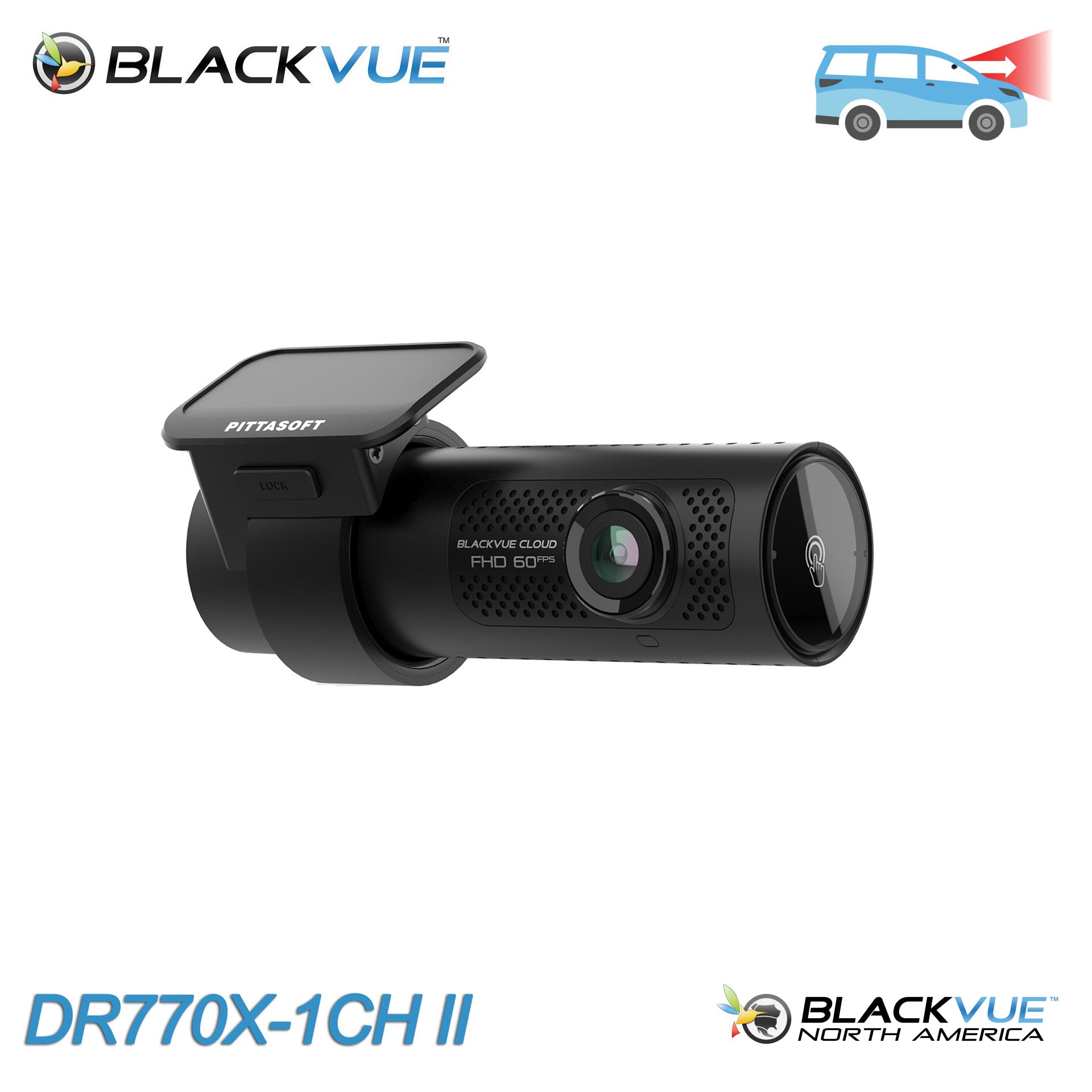
Blackvue DR770X Dashcam
$280
Shop on Amazon
WeatherTech Floor Liners
$110
Shop on AmazonAs an Amazon Associate, we earn from qualifying purchases.