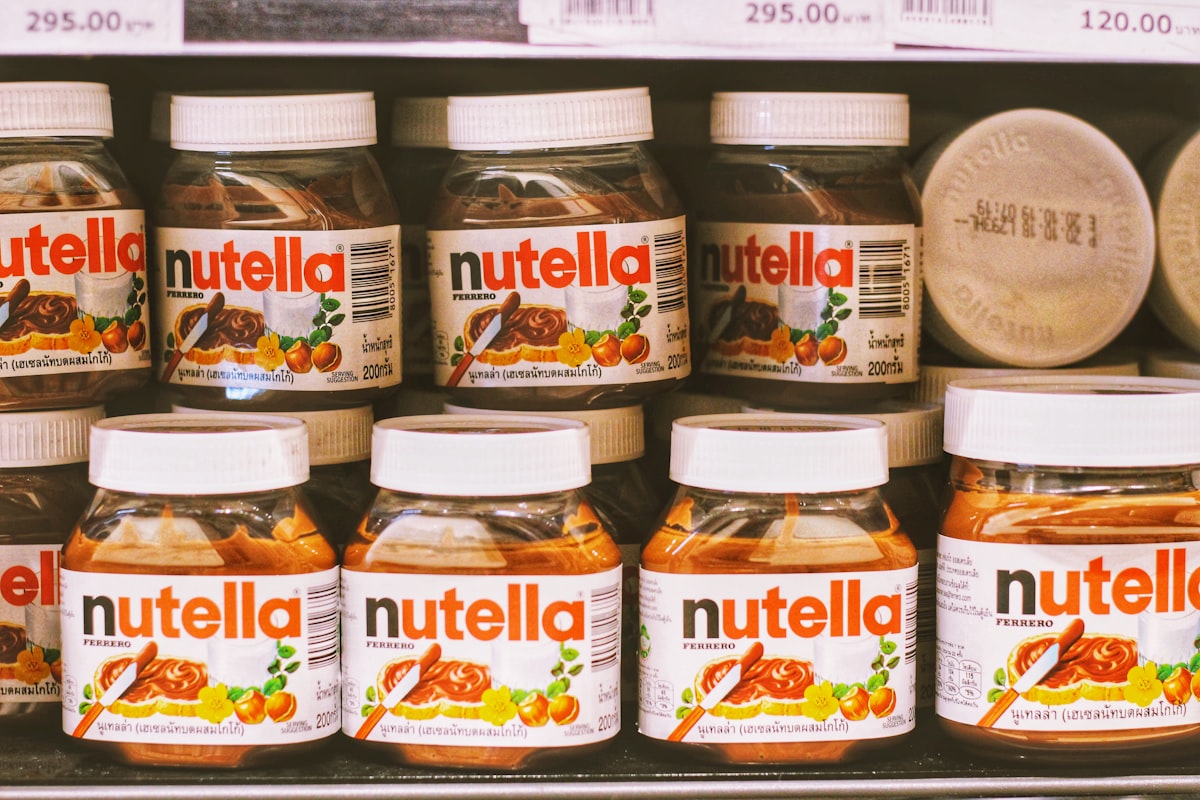
A Jar of Nutella Floating in Zero Gravity Just Became the Marketing Moment of 2026
Four minutes before the Artemis II crew broke the human distance record at 252,756 miles from Earth, a clearly labeled jar of Nutella drifted gently across the live broadcast frame, rotating slowly in zero gravity, and the internet lost its mind.
NASA press secretary Bethany Stevens issued a clarification within hours. The agency “does not select crew meals or food in association with brand partnerships,” she said. It was not product placement. The crew had Nutella aboard because it is calorie-dense, its thick consistency prevents crumbs and spills in microgravity, and it is the kind of comfort food that matters when you are 250,000 miles from the nearest grocery store. Barbecue beef brisket, macaroni and cheese, broccoli au gratin, tortillas, hot sauce, and coffee also made the manifest. Nutella was just the one that decided to float in front of a camera at exactly the right moment.
Ferrero, the company that makes Nutella, got an estimated tens of millions of impressions in the hours following the broadcast. They paid for none of it.
The Best Accidental Ad Since Red Bull and Felix Baumgartner
To be clear about what happened here: a household-name food brand received global media coverage during a historic spaceflight milestone, in the context of a moment that will be referenced for decades, with zero production budget and zero media buy. The jar was just there. Doing jar things. In space.
The comparison that keeps coming up is Red Bull’s 2012 Stratos jump, when Felix Baumgartner jumped from 128,100 feet and Red Bull got 35 million live viewers. That one was entirely engineered and cost an estimated $30 million to produce. The Nutella moment cost Ferrero the wholesale price of one jar.
Marketing professionals will study this for years, not because it teaches a replicable lesson (you cannot plan for this), but because it is the purest possible illustration of the difference between earned media and paid media. You can spend a hundred million dollars on advertising and not generate the goodwill of a single floating condiment jar during a live NASA broadcast.
Four iPhones in Space
The other story from Artemis II’s social media presence is more deliberate.
NASA brought four iPhone 17 Pro Max devices aboard for the crew to document the mission. The phones run in a restricted configuration: no Wi-Fi, no Bluetooth, no internet access. They function as photography and video capture devices only. No posting from space, no live Stories.
The content generated on those devices has been coming out in batches. Commander Reid Wiseman took an Earth photo that circulated widely; it was confirmed as taken on an iPhone 17 Pro Max’s front-facing camera. That detail is worth pausing on. The front-facing camera. The one people use for selfies. Pointed at Earth from 250,000 miles away.
NASA’s Instagram account posted a crew introduction Reel early in the mission, styled like a 1990s sitcom with the Full House theme song. It accumulated more than 13 million views. The bit is straightforward: four astronauts, a recognizable piece of audio, the kind of lo-fi charm that NASA has been surprisingly good at lately. The agency has figured out, somewhat late but better than never, that the people who will fund the next generation of space exploration are currently watching short-form video content on their phones.
The Fake Samsung Post
One thing that circulated alongside the genuine content: a doctored image claiming NASA had “clowned Samsung” over the Orion mission photos, implying some kind of official Apple vs. Samsung rivalry played out on agency social media. The exchange never happened. The post was fabricated.
This is worth mentioning because the fake version spread almost as fast as the real story, and the real story is plenty interesting without embellishment. NASA used iPhones. The photos are good. That is the story. The fictional version added a brand war narrative that fit people’s priors about tech companies and made for a sharper share, which is exactly why it spread. It did not happen.
What This Mission Is Doing Culturally That the Science Coverage Misses
There is a version of Artemis II coverage that is entirely about the distance record, the heat shield, the geological observations, and the splashdown trajectory. That coverage is accurate and important.
There is also this version: four people, hundreds of thousands of miles from Earth, posting sitcom-style video content, accidentally launching a Nutella marketing campaign, and making the act of going to the Moon feel accessible in a way it has not since the Apollo broadcasts.
The original Apollo missions aired on three television networks to an audience with no alternative source of information. Artemis II exists in a media environment where the human distance record competes for attention with everything else on the internet simultaneously. The fact that it broke through at all, that a Nutella jar floating in a spacecraft became a moment people shared without prompting, suggests the mission is doing something right culturally, regardless of what the instruments find on the lunar surface.
The crew lands off San Diego on April 10. The iPhone photos will keep coming after that.
Our Picks

Kindle Paperwhite (2024)
$150
Shop on Amazon
Apple TV 4K
$129
Shop on Amazon
Sony WH-1000XM5 Headphones
$328
Shop on AmazonAs an Amazon Associate, we earn from qualifying purchases.