
Inside Augusta National's New Player Services Building (Where No Outsider Will Ever Go)
Augusta National Golf Club does not share its spaces casually. The membership list is confidential. The grounds are closed to the public for most of the year. The television broadcast is controlled to a degree that would make most networks uncomfortable. The tournament itself operates under rules that would feel arbitrary at any other sporting event but feel inevitable at Augusta because the club has been cultivating inevitability since Bobby Jones and Alister MacKenzie laid out the course in 1932.
The new Player Services Building continues that tradition of controlled exclusivity, but with a twist. This space isn’t built for patrons, sponsors, or television executives. It’s built exclusively for the professional golfers competing in the Masters. No media. No agents. No public. A players-only sanctuary designed to make the best golfers in the world feel like guests in a private club that exists solely for tournament week.
The Entrance
Players arrive through an underground garage, bypassing the main entrance entirely. The transition from parking to the building’s interior happens through a corridor that displays Alister MacKenzie’s original cross-section drawings of every hole on the course. MacKenzie, a British-born surgeon turned golf course architect, created these drawings during the course’s design phase in the early 1930s. They show the intended contours, bunker placements, and green complexes in meticulous hand-drawn detail.
Walking past these drawings on the way to your locker is a design decision that could only happen at Augusta. The corridor functions as both a passageway and a reminder: you are about to compete on a course that was conceived by one of the most celebrated architects in golf history, and the evidence of that conception surrounds you before you even reach your locker.
The Locker Room
100 individual lockers, each fitted with a personal safe and phone charging shelf. Gold-plated Masters emblems adorn the handles. The number 100 accommodates the full tournament field plus alternates, ensuring that every player who competes has a dedicated space rather than a shared or temporary arrangement.
The pairing system adds a layer of tradition that Augusta uses to reinforce the generational continuity of the tournament. Amateurs are paired with Masters champions. A first-time qualifier might open their locker next to one labeled for a five-time green jacket winner. The proximity is intentional. Augusta wants young players to understand, from the moment they enter the building, that they are participating in something with a lineage that extends back to Jones himself.
The Historical Displays
This is where the building transitions from functional to sacred. Four trophies from Bobby Jones’ 1930 Grand Slam are displayed on loan from the Atlanta Athletic Club during tournament week. Jones won the British Amateur, the British Open, the U.S. Open, and the U.S. Amateur in a single calendar year, a feat that has never been repeated and almost certainly never will be. The trophies travel to Augusta each April and return to Atlanta when the tournament ends.
Framed letters from Arnold Palmer, Jack Nicklaus, and Tiger Woods hang in the building. These are handwritten correspondence, not reproductions or printed copies. Woods’ letter is dated 1997, written after his record-breaking 12-stroke victory at age 21. Palmer’s and Nicklaus’ letters represent the two players who most defined the Masters as a global sporting event during the television era. Their words, in their handwriting, are present in a room that only the players will see.
The curation is deliberate. Jones’ trophies represent the amateur era that gave birth to Augusta. Palmer and Nicklaus represent the professional era that made the Masters the world’s most prestigious golf tournament. Woods represents the modern era that expanded the tournament’s audience globally. Three generations of the game’s most consequential figures, documented through original objects, displayed in a space that their spiritual successors occupy during tournament week.
Performance and Dining
A full recovery and fitness floor with physiotherapy facilities occupies one level of the building. Modern tournament golf demands physical preparation that would have been unrecognizable to the players of Jones’ era. The fitness facilities reflect that evolution while maintaining the aesthetic standard that Augusta applies to everything within its property lines.
The Magnolia dining room opens onto a porch overlooking the practice range. The view connects the dining experience to the competitive preparation happening below, allowing players to eat while watching their competitors hit balls. In a tournament where strategic observation is a competitive advantage, even the dining room serves a dual purpose.
What It Means
Augusta has always understood that exclusivity compounds. Every detail in the Player Services Building reinforces the feeling that competing in the Masters is qualitatively different from competing in any other golf tournament on earth. The U.S. Open has prestige. The Open Championship has history. The PGA Championship has depth of field. The Masters has Augusta National, and Augusta National has a talent for making everything that happens within its boundaries feel like it belongs to a separate category.
The Player Services Building doesn’t just support that feeling. It architecturally enforces it. The corridor with MacKenzie’s drawings. The lockers with gold-plated emblems. The Grand Slam trophies. The handwritten letters. Each element tells the player the same thing: you are here because you earned a place in a lineage that includes the greatest to ever play this game.
No outsider will ever see the inside of this building. That’s the point.
Our Picks

Kindle Paperwhite (2024)
$150
Shop on Amazon
Apple TV 4K
$129
Shop on Amazon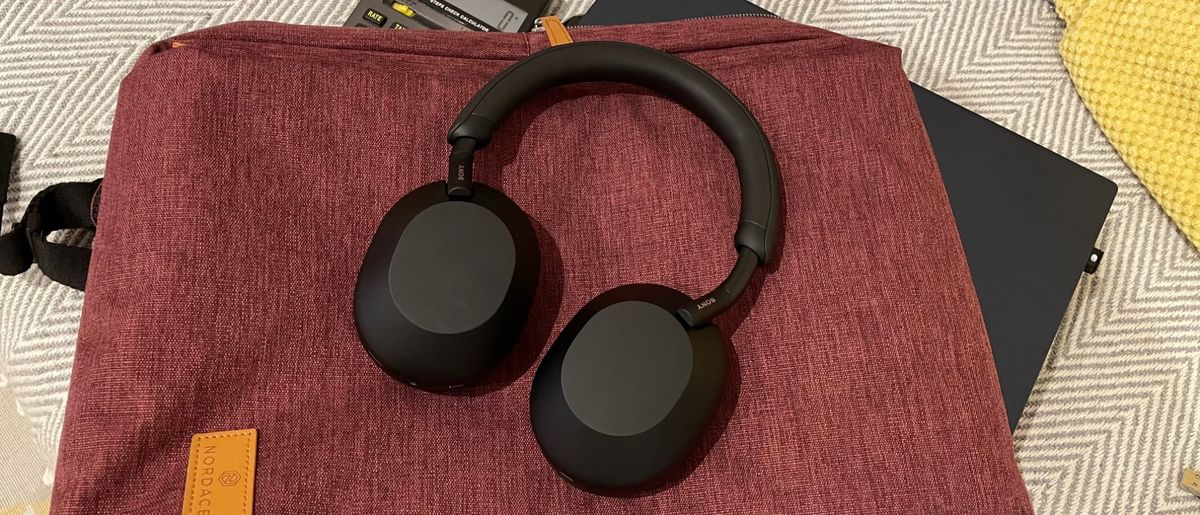
Sony WH-1000XM5 Headphones
$328
Shop on AmazonAs an Amazon Associate, we earn from qualifying purchases.