Artemis II Just Set the Human Distance Record at 252,756 Miles. Here's What the Crew Actually Saw.
At 12:56 PM CDT on Monday, April 6, 2026, the Artemis II crew passed the furthest point any human being has ever traveled from Earth. The number: 252,756 miles. That beats the record Apollo 13 set in April 1970 by more than 4,000 miles, a record that had stood for 56 years because no one had gone back out that far to break it.
Commander Reid Wiseman, Pilot Victor Glover, Mission Specialist Christina Koch, and Canadian Space Agency astronaut Jeremy Hansen are the four people now on the short list of humans who have been furthest from the planet. The record will almost certainly fall again when future Artemis missions go back. But someone has to be first, and on April 6, it was them.
What 252,756 Miles Looks Like
The Apollo 13 record is a strange one to hold. That mission didn’t break the distance mark on purpose. It did it because an oxygen tank exploded two days after launch, the crew aborted the lunar landing, and the free-return trajectory that saved their lives also swung them farther from Earth than any humans had been before or since. They got the record as a consolation prize for nearly dying.
Artemis II achieved the same distance on purpose, as part of a planned trajectory, with a functioning spacecraft and a crew that was not rationing oxygen. The context matters. The number is the same kind of number. The circumstances are not.
The mission launched April 1 from Kennedy Space Center’s Pad 39B. The 10-day flight is structured as a crewed flyby: no lunar landing, just a figure-eight path that swings around the far side of the Moon and uses lunar gravity to slingshot back toward Earth. Splashdown is scheduled off the coast of San Diego on April 10 at 20:07 local time.
What the Crew Observed
The distance record is the headline. The science is the story worth staying for.
During the closest lunar approach, the Artemis II crew conducted geological observations of approximately 35 places of interest on the lunar surface. They used naked eyes and cameras, and they captured thousands of photographs. NASA planetary scientists had specifically briefed the crew on what to look for: color variations in the regolith, crater morphology, surface features in regions that Earth-based instruments cannot resolve with enough fidelity to be useful.
Here is the part that tends to get lost in the coverage of spaceflight records and viral moments. The human eye, connected to a trained brain, remains one of the better sensors we have for certain kinds of observation. Satellite imagery returns data. A geologist looking at a crater wall returns interpretation. The crew of Artemis II was not just taking pictures. They were making the kind of contextual judgment calls that no current unmanned system can replicate.
Chris Lintott, Professor of Astrophysics at the University of Oxford, put it plainly when asked about the value of sending humans on this mission: “The value of the images coming back from Artemis and its crew is artistic, not scientific.” He means that provocatively. The scientific instrumentation on unmanned missions routinely outperforms what four humans in a capsule can accomplish. What humans do that instruments cannot is look at something and know it matters before they can explain why.
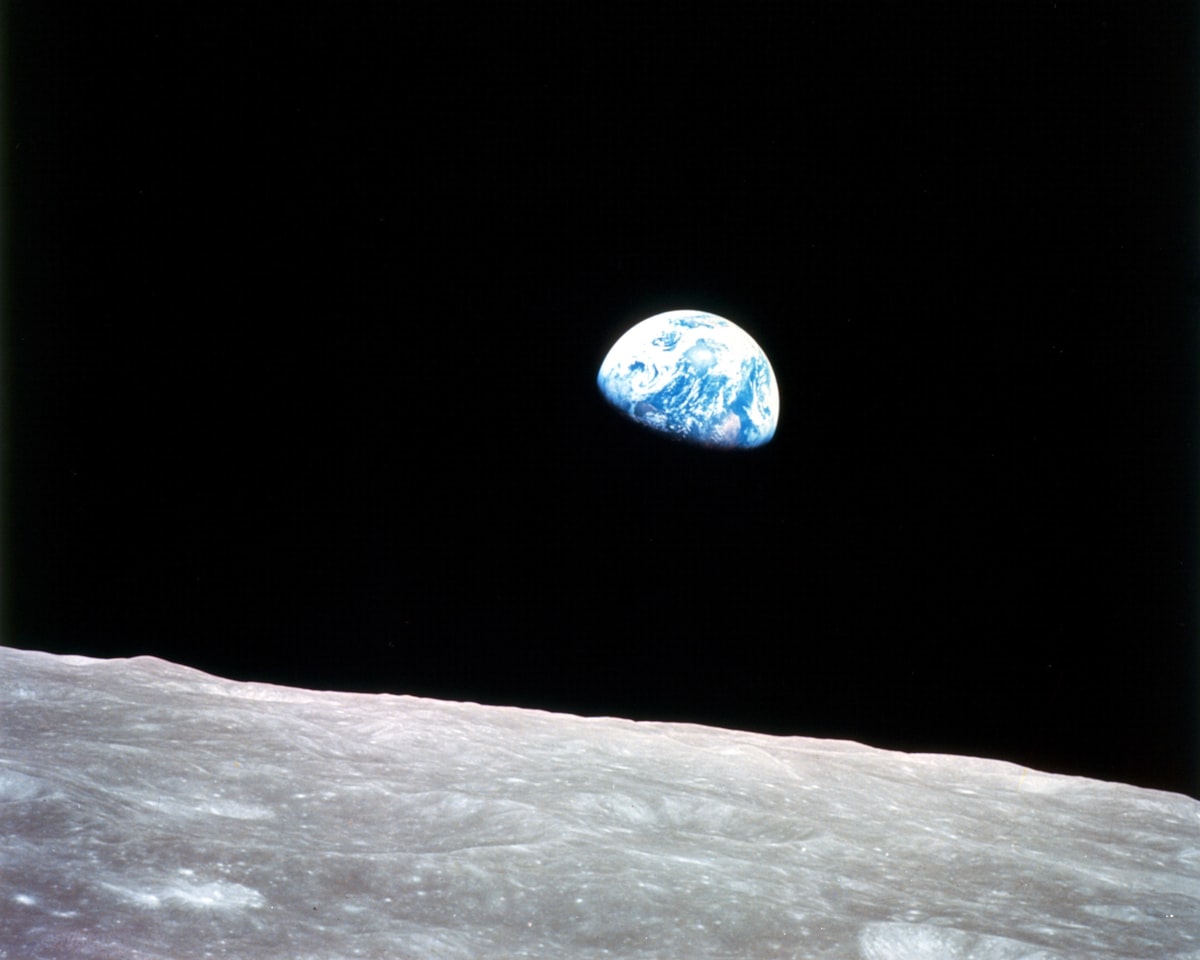
The crew also had a vantage point unavailable from any other position. From lunar orbit, they observed the sun disappearing behind the Moon, an eclipse viewed from the wrong side. No unmanned mission has returned that perspective. No human has seen it before.
The Far Side
For a few hours during the flyby, Artemis II passed behind the Moon and lost contact with Earth entirely. No radio signals penetrate the lunar body. That brief blackout is both technically routine and genuinely strange to contemplate. Four people, temporarily unreachable, on the far side of the Moon.
What they saw during that pass was terrain that no human has ever observed directly. The lunar far side has been imaged extensively by satellites going back to the Soviet Luna 3 mission in 1959. The Chang’e missions have landed there. There are maps. But maps are not the same as looking at something from 60 miles overhead through a window, and the Artemis II crew had the first direct human eyeballing of the far side’s landscape, its craters and highland plains and the South Pole-Aitken Basin, the largest confirmed impact crater in the solar system, roughly 1,550 miles across.
Why Any of This Matters Beyond the Scoreboard
The Artemis program has been criticized on cost and timeline grounds since its inception, and not without reason. NASA’s own inspector general has flagged the per-flight cost of the Space Launch System as unsustainable. The original Artemis schedule has slipped repeatedly.
But the question of whether to go back to the Moon is not purely an accounting exercise, and the coverage that reduces Artemis II to a distance record misses the harder argument. The crew made 35 geological observations in three hours of lunar proximity. Scientists will spend months analyzing what they saw. The last time humans examined the Moon’s surface directly was December 1972. Everything we have learned about the Moon since then has come from instruments and robots.
There are things the instruments have not told us. The Moon’s geological history is still partly unresolved. The water ice confirmed at the south pole, the target for Artemis III’s planned landing, was discovered from Earth orbit and confirmed by unmanned missions, but its distribution and depth remain uncertain enough that the planned crewed landing site has been adjusted multiple times.
What Artemis II cannot do is land and dig. What it can do is look, and report back, from a closer vantage point than any human has occupied since Gerald Ford was president.
The record at 252,756 miles will almost certainly be broken by the next crew that goes out this far. The geological observations made during the flyby will still be in the literature when those future crews are reviewing what their predecessors found.
One is a number. The other is science. Both are reasons to pay attention.
Our Picks

Away Carry-On
$275
Shop on Amazon
Osprey Farpoint 40
$185
Shop on Amazon
Peak Design Packing Cube
$45
Shop on AmazonAs an Amazon Associate, we earn from qualifying purchases.